
47. Processin'
Revising the country, its history, one's self, and an essay...


I’m thinking about revision at the start of this new year. Revision is my favorite part of writing (next to dreaming about writing things I don’t have the time to write). I don’t disparage drafting to my students, transmitting thoughts to language, messy and ungainly. So many teens will essentially only draft (in the name of efficiency, to meet a deadline) if an assignment doesn’t have a formal sequence—an outline for a carrot (grade), a draft for a carrot, a revision for a carrot, proofreading for a carrot, and so on. I do build in that sequencing, sometimes even making the “real” due date a week after the official announced one. I also engage in some aggressive messaging. Drafting is the initial spell, an invocation, the slab of marble—I say that. Revision is the artistry, the shifting of paragraphs, the trying on of new verbs and adjectives like department store outfits. I tell students that this is where the magic happens, in revision. I overstate this but it’s for a good cause.
Revision is also what people who are not me often do at the start of a new year. See, I prefer to engage in personal improvement whenever I observe the need (rarely, of course). Imagine: realizing you’re an incurable jelly bean addict in July and deciding to just keep the glove compartment, desk drawer, and laptop bag stocked until January, when you will decisively quit. What kind of loon does that? March is no less meaningful anyway, one could argue. Why not let the general excesses of holiday consumption crest and crash and then, as the foam recedes, make adjustments? New year, new self—we don’t really say this, but we at least pretend to see fresh pastures each January. Not quite so blank as a new gradebook, but terrain ready to be tilled.
I began class last week in a good mood in part because I wanted to relay this message. Students who finish the first semester with a whimper or chaotic collapse sometimes return sheepish, aware that their denouement for the concluded term may tattoo them for posterity as a student-of-a-certain-sort. Stephan, who performatively places a chessboard on his desk and tries to snooze with his chin perched on one fist, used AI to fabricate a massive research and website project. His grade dropped like a cartoon anvil. Karla simply neglected to turn hers in, even after carefully producing 90% of it with the support of her resource teacher. Only the teacher responded to my concerned emails. To them, to everyone, I say: I would not be doing this work if I wanted to judge people and wash my hands of them. I can think of little less edifying than searching for confirmation of failure, finding it, documenting it, and hoping that some status quo is maintained over the course of half a year. What a job to quit if you have it. I want to see a better story than The Predictable Case of the Stagnant Student: some dramatic twists, fine, but a genuine triumph, a resolution. A formula but warmer. I want to see everyone win—even Stephan who, when I’m on a bit of a professorial heater, likes to scrunch his face into a haughty knot and nod approvingly like a gin-pickled sage who has lost more books than I’ll ever read.

Likewise, I ask, poorly channeling a podcast conspiracy theorist: do you really think the whole curriculum, the design of this class, has been incidental?
Gasp: the shaping of a self over time is the (unsurprising) literary theme of the senior year, from The Stranger to Homegoing to Blade Runner—whether that self be buffeted by societal expectations, unjust laws, corporate forces, familial pressures, oppressive governments, or the weight of history. They encounter characters working towards that desired self and so they should be doing the same. Why else would I, on the first day of school, ask them to create a symbolic self-in-training on an index card? They write down something they love about themselves, an academic goal, and a personal goal—and then, in January, find their cards and edit them for goals accomplished (or abandoned) and new hopes hatched (and maybe recently discovered traits to love as well). At the end of the year, the cards accompany their creators as they head towards graduation. Or they get abandoned and recycled unceremoniously the next day. Every January, I hear myself cautioning kids not to edit another person’s dreams or revise any soul other than their own. Symbolically, very dangerous stuff—to be rapacious in this respect or at least so generic that you can’t distinguish your self from a throng.
I do not know if this minor class tradition is effective or if the overarching theme of the year seeps into students’ pores to the extent I want. In interactions with students, I hope I uphold my authentic intent—to avoid prejudice on the basis of past behaviors. But it is essential: in writing, in life, we can always scrape the stone, gaining wisdom, reinventing, avoiding paths and approaches that have proven counterproductive.
Students may also return eager to get back to the self-destructive practices that marked their first foray in Lit 12. For some, the worn furrows of habit are too cozy to abandon (even if they lead to ruin, which, by my definition, is a life lived in a colorless van parked next to a mud pit about ten miles from the outskirts of The Citadel of Ideas). This is a choice and anyone is free to make it.
Along those lines, one of the best assignments from the past semester was a new entry, an idea born of feeling like my class too often moved forward without circling back—the calendar being a scourge and all. I’ve always conspicuously linked texts, reminding students of commonalities between characters and narratives, but less frequently have I had students review their own writing within a week or month of producing it.
At the end of every year, when putting together a digital portfolio of the year’s essential artifacts, students assess their growth, but this ought to happen fluidly through the year. In early November, with the product due in mid-December, I simply asked students to pick one discussion forum response to revise. These responses are 250-word-ish mini-essays in response to reading—15 or so each semester, the closest thing I do to conventional essays. For the most part, students advance arguments about texts. They reply to a prompt, marshal evidence, and reason through it. These are formal-ish texts, essentially blog posts but with expectations for punctuation and coherence.
The task involved showing up for a meeting during Tutorial period, which is twice a week—a short chat to identify the ideal piece for revision and discuss areas for growth. The meeting was probably the key component: a face-to-face interaction over a text. I found that students were almost hyper-aware of what was both comfortable and challenging for them. They needed affirmation more than illumination. Some knew they needed to work on complete sentences. Some wanted to focus on linking evidence and claims. Some were keen to improve their arsenal of academic vocabulary. Whether related to the nuts and bolts of sentence-level writing, organization of paragraphs, close reading, or language choice, each kid could come away with a personalized cocktail for improvement. The message, even for high-achieving students, was that anyone can and should keep evolving as a writer. The students applying to Brown and Stanford didn’t get a pass. If you read and write really well, let’s do more, I told them. They liked hearing this. I suggested roping in another text for a comparison, picking an adjacent theme for further discussion, or at least dredging up more evidence and tweaking the thesis to reflect a richer reading. Along with the revision, all students had to include a reflection, easily the second most important element after the conversation: what had they changed, and why had they changed it? The aim was that they would come away with a sharper sense of their writer selves and a useful program for self-improvement in the months to come.
Teachers grade products but teach processes. The fact that my kids rewrote a text mattered but not necessarily more than the conversations that preceded the work and the attendant reflections. This process is a story, and students, like me, enjoy a narrative that celebrates commitment, powers seized and enhanced. They’re raised on video games and superhero movies. They learn beauty routines and weightlifting regimens on social media. However simplistic or potentially disingenuous or unhealthy, short-form content piped into their devices is rife with comebacks, surprise endings, and unexpected glow-ups. Why shouldn’t they treat their real selves as malleable, their writing likewise as ripe for transformation as any coursing river.
Here, in very early 2026, Lit 12 students are studying history through literature in what I consider to be a two-headed monster unit—one that leaps from the United States, abroad, and back again by its conclusion. I have written about it before—There There, Isabel Wilkerson, “CivilWardLand in Bad Decline,” Forrest Gump, Clint Smith, Homegoing, and more.
And, even if it weren’t the start of a new year, my students’ response rewrites just a few yards back in the rear-view mirror, revision would be at the forefront of my mind. It’s one of the first words I think of when I consider history, specifically that of the country I (and most of you) call home.
And it’s also what I think of when I watch as the current administration remodels said country: perhaps a tacky gilded pirate ship with a self-harm fetish helmed by a dysfunctional crew of brain-damaged bigots?
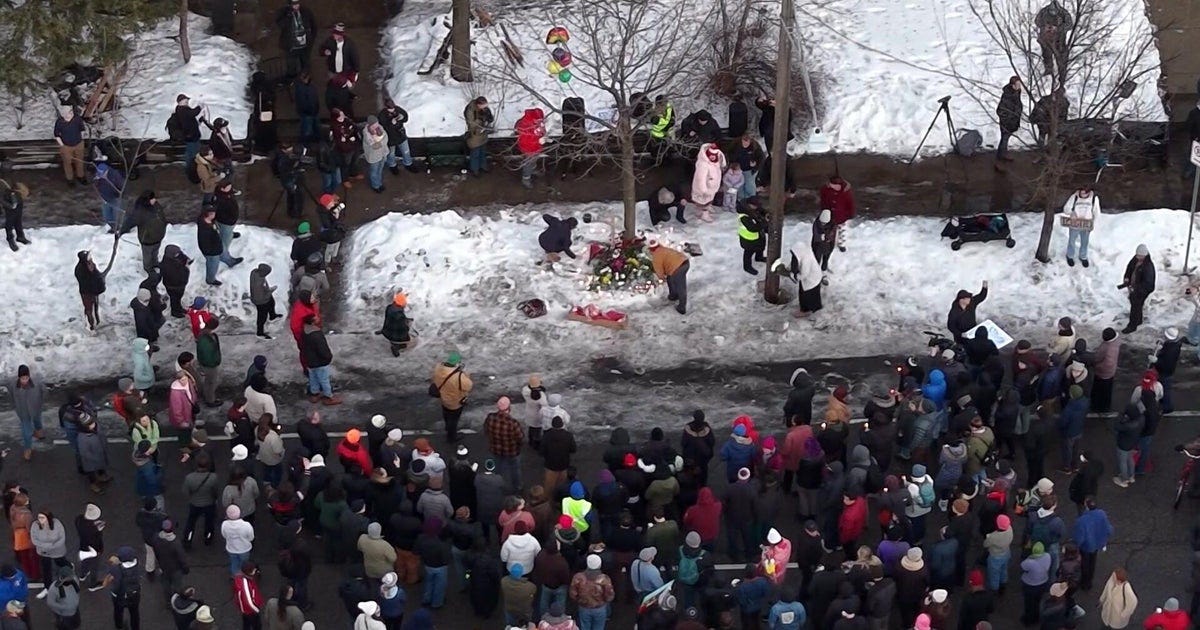
On Wednesday, June 7th, an ICE agent killed Renee Good, a poet-mom-citizen in Minneapolis. Administration officials immediately labelled her a “domestic terrorist,” a “professional agitator” who had “weaponized” her car against a brave man who subsequently needed to be hospitalized, even though every accessible video shows a different drama (one that includes the masked shooter nonchalantly walking back towards his crew with no hint of a limp).
A subsequent video from the agent’s own camera shows the woman, seconds from her death, addressing the agent calmly, and, after the shooting, a male voice, likely his, referring to her as a “bitch.” Nonetheless, the vice-president hailed the video as evidence in defense of the agent’s actions—she’d, again, tried to hurt him with her car, he’d narrowly avoided serious injury, etc.
Enraged, frightened, some of my sharpest former students, like adults, spent the second half of last week throwing 1984 quotes around Instagram:
“The Party told you to reject the evidence of your eyes and ears. It was their final, most essential command.”
I get why that particular book (and that quote) feels useful. We’re facing a state-funded propaganda machine, the turning of vast surveillance powers towards citizens, the spectre of spectacle-oriented governance, the scraping away of accepted historical narratives, the plausibility of upcoming election interference, federal investigations and harassment directed toward enemy donors and organizations, the insistence that the economy is thriving when danger signs blare, a less-than-soft slide into you-know-what…
The relentless, reductive rhetoric of the vice-president and others, the selection of nonexistent truths on which to construct conviction, normalizes lies. It also normalizes killing people, which is part of 1984 too.
Lo, by the end of the weekend, the messaging had been further revised. Not only had the car maybe struck the agent—okay, so it didn’t—but the lady, or at least her wife, had been disrespectful. The rationale evolves—mouthy white “lesbians” are now eligible for execution—and the message remains the same. On Tuesday, CNN reported that Good served on her child’s school’s board—which, like many in immigrant-heavy communities, links to documents “encouraging” parents to monitor ICE activities. Now, volunteering for your kid’s school can be labelled domestic terrorism.
Despite trumpeting its relevance in a timely though flawed November 2016 Atlantic article, I don’t teach 1984 anymore. I replaced it with The Handmaid’s Tale, and then, replaced that with a nonfiction-focused investigation project on tech and dystopia. For all its quotability and prescience, Orwell’s book is kind of boring, baggy, in need of an editor’s scalpel (or cleaver) and I grew tired of marketing it to students as, essentially, medicine—something grim to process that would be of benefit to them in the era of mass surveillance and eroding language skills.
Also, while the novel may anticipate some of its tools and tactics, the regime it envisions squishing the hearts and minds of an entire superstate looks little like ours.
For one, Ingsoc is colorless, humorless, and efficient, while this administration and its admirers think, above all, that they are funny, gods of content creation—from the ringleader himself with his dances and impersonations to the comms people churning out grotesque AI videos and antagonistic drivel for official government accounts and sites. Can you imagine a holographic Big Brother and some Inner Party bigwigs doing the wobble for likes? The president’s absurdity, not his strength, has always been the secret weapon. Being dominant while ridiculous—a viable American dream!
But it’s also deadly serious—another feature of Trumpism, how silliness and shamelessness come with a casual capacity for violence. The current regime has no desire to be omniscient, to mash an entire population into lock-step compliance, to demand perfection of belief. They are transparently goofy, whiney, awkward, and bumbling—America, 2026, not Soviet Union in the 40s. The agents are unathletic and under-trained but decked out in armor worthy of the Brotherhood of Steel in Fallout, Gregory Bovino poses for glamour shots in an SS-style trench coat, and the DHS X account posts (last week) a strange dystopian cowboy nostalgia meme captioned with lyrics from a white nationalist anthem. It’s desperate and heavy-handed, the winks (too many to mention), the summoning of such histories and mythologies, what was once mostly confined to memes and message boards. We can be both scornful and afraid.

The end is different too. The present opponents of freedom can forever revise their mandate—to deport criminals, to find “illegals,” to bring a city to a halt. They may not reprogram in brutal, calculated fashion like the Party, but they can terrorize, impoverish, and marginalize any on the dissenter spectrum while maintaining certain fundamentals of liberty. You can read and watch anything you want in your home, order what you desire and have it delivered to your door. You can maintain a sense of plenty and freedom. Piracy and the power to ply it are the true prerogatives, not ideological purity. There is reprogramming, but it’s not designed to mold nonbelievers into the faithful, just render that 50-60% of the country perpetually livid and morose, paranoid, doom-suffused, all for the amusement of the deeply devoted, those whose brains were warped long ago.
On Wednesday of last week, Border Patrol officers menaced the grounds of a Minneapolis high school (after apparently chasing a car to the location), physically bullying school officials and shooting munitions at students, families, and staff. There’s video of that too—here, here and other places. You can see people, some carrying protest placards, covering their mouths after the spray, a staff member being thrown to the ground, a scrum around him, and hear students cursing, overwhelmed with emotion as they witness an assault by their own government.
On January 7th, Lila Dominguez, the editor of the Roosevelt High School newspaper, wrote an editorial called “ICE Needs To Get Out Of Minneapolis,” in which she reflected on what happened on school grounds:
“It’s hard to process these things, especially when they are happening at our front doors. The second I got home…today at 5:00 the first thing I did was hug my dad tight. It is so important to be with the people you love during this time. If you know people in your community who are struggling, reach out. During this time we need to be unified as one.”
This incident may have happened fluidly, but it’s probably also an impromptu test, part of that reprogramming, to communicate that, regardless of where one is—even at school or church—state aggression can come to you, physically hurt you, destabilize your routine, make you live differently. And then see how you respond when pressed. Dominguez narrates that discomfort for posterity.
I would like to be wrong about my sense that the administration has essentially declared a civil war on blue states, with Minnesota the testing ground, but I am ready for this moment, not eager to see a version of this come to the Bay Area (as has been threatened at times), but to be the kind of educator who makes students feel safe, heard, and, as Dominguez wrote that day, unified. I have been reading heavily, (still) eating plenty of jelly beans, and boning up on postmodernism to stay wise to the latest twists in the rollicking mournful American tragicomedy epic burlesque. As I wrote in that 2016 article about 1984, I remain “ecstatic to be a teacher at this time in American history.”
(I mean, I am going on leave next year, but avoiding this moment is far from the reason!)
That two-headed monster of a Lit 12 unit on history and storytelling feels deeply relevant when you consider the degree to which the current administration is actively engaged in revising the more distant past along with what happened on that street in Minneapolis last Wednesday.
Making America great again involves trying to edit the present country (through purges and deportations) to match up with an imagined version of the past, simultaneously pressuring school curricula, museums, and monuments to conform to that vision—whether that means refusing to represent slavery as the spur for the Civil War or characterize Robert E. Lee as a betrayer of the United States.
I’ve written about this unit before in pieces like this one. In her book Caste, Isabel Wilkerson famously compares this country to an old house in need of repair, a promising but flawed structure requiring care and upkeep from those who’ve inherited it. Without a unified intervention, Wilkerson argues, “the awkward becomes acceptable, and the unacceptable becomes merely inconvenient.” We can get used to the grim curdling of the American experience because the alternative—alarm, true upheaval, solidarity, dramatic resistance—is hard and scary.
The president’s executive order from March 2025—one of many I can have students read—impugns a supposed “historical revision [of] our Nation’s unparalleled legacy of advancing liberty, individual rights, and human happiness…as inherently racist, sexist, oppressive, or otherwise irredeemably flawed.” In November, Clint Smith wrote a response of sorts: If the institution of slavery, for instance, is a “hurricane” through “the social, political, and economic infrastructure of our country,” then teaching the history without assessing its distressing and well-documented legacy—what Wilkerson would consider damage to the integrity of the old house—amounts to “discussing the speed of its winds, and not the damage it left behind.”
To this end, the Smithsonian Museum may have its funding jeopardized (62% of it being federal) if it doesn’t permit intense scrutiny of its exhibits. True stories about the experiences of enslaved people must be redacted from materials at many national monuments and parks. According to a new White House website, the Democratic Party is officially to blame for the January 6, 2021 Capitol riots, the violent protestors recast as peaceful activists and curious tourists, the host of videos and accounts we all absorbed not so much “memory holed” à la 1984 as remetabolized.
It seems futile to try to scrub away a large, information-soaked population’s understanding of the past, but these efforts also feel predicated on a deep appreciation for human laziness and the awareness that algorithm-carved social media silos and AI fabrications can muddy the waters, making the traditional pathways to truth tougher to navigate. And it can work. Responsive to power, the same Republicans who derided the riots in 2021 now agree with the White House’s revision. Oceania was always at war with Eastasia, who controls the past controls the future, all that [is] needed [is] an unending series of victories over your own memory, etc.
“History is vulnerable,” Winnie, a senior, wrote. And no, that’s not her real name!
The assignment triggering this response was a discussion forum prompt asking students to compare and contrast Wilkerson’s approach to considering the past in the present with the White House’s. Her point was that statue-solid, dust-coated, sepia-toned history—easily the least relevant subject in students’ minds—is in fact a thing in flux, fragile, easily revised by anyone with power.
Winnie’s classmates expanded the discussion. Jules wrote about the power of perception, the way that hundreds of millions of people can watch the same video and conclusions can splinter like wood around a badly hammered nail. We get to make choices about the content we decide to excise from or include in a vision of the past, Kat explained. Guy argued that there is “beauty in truth,” that renovating Wilkerson’s old house shouldn’t be construed as a form of penance. Bernard wrote that “we can love and understand at the same time,” framing such an undertaking as an act of devotion, far from unpatriotic in spirit. Patriotism, Bernard added, is itself a malleable concept, clung to by protestors and oppressive government alike. Rick articulated the difference between responsibility and blame, explaining that the former is empowering while the latter, in the case of Americans living in the present, unproductive. Theo drew out Wilkerson’s metaphor, characterizing the current administration as a clumsy interior decorator installing framed art and plants to distract from leaks and cracks. He made it seem pathetic, cringe as teenagers said what seems like many years ago.
Pettiness is a feature, the aims naked, the machinations easy to anticipate. But when there’s (often) unchecked power, cringe can be king.
I was heartened, I guess—even though a week earlier the majority of class had admitted in a Google poll that they pretty much never think about American history outside of a class. Students see their country as something to revise. I like Wilkinson’s metaphor but why not also an essay, a story. Not as concrete, I suppose, for some readers. But here’s an opportunity for students’ concerns about writing, country, and self to coalesce. They can see this place, their place, as a process more than a location just as they can learn to view their own identity as a project to forever tweak. We self. We america. We shed and regrow skin throughout our lives, gaining new abilities, seeing ourselves through new prescriptions, ditching bad writing habits, like me, who approaches these newsletters like a practice space guitar jam—flowchart, key, chemical fortitude (mostly Aleve), and not much else. I need an editor, but not having one is the exercise (in my case, that is). There’s no end point to America or a writer, no destination, no summative assessment (because there can always be another idea, another test, self-imposed or otherwise). There’s just formation and reformation, hope that better drafts keep emerging from the muck.
You and your students continue to be inspiring, Andrew.